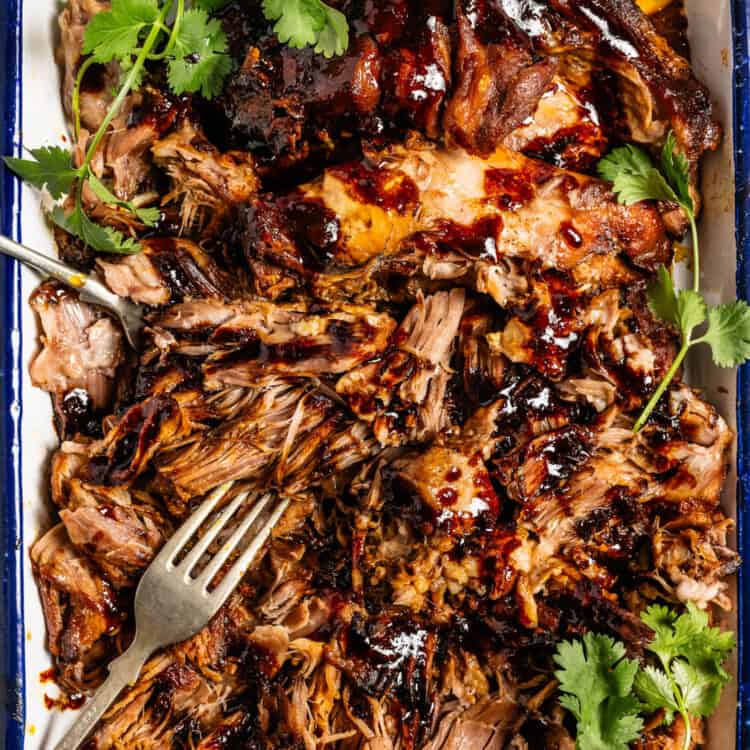
Gochujang Korean Pulled Pork

This post may contain affiliate links. Please read our disclosure policy.
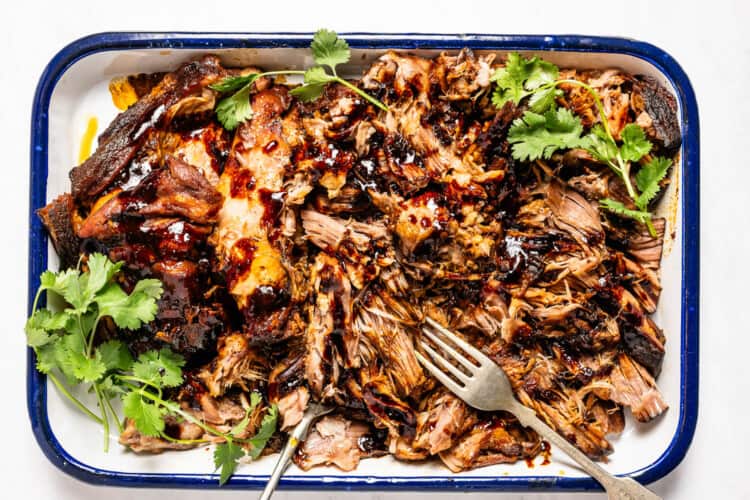
Win over the whole family with my flavor-packed Korean pulled pork. Slow-cooked in a bold mix of gochujang, soy sauce, honey, and chicken stock, it turns irresistibly tender with almost no effort thanks to the slow cooker.
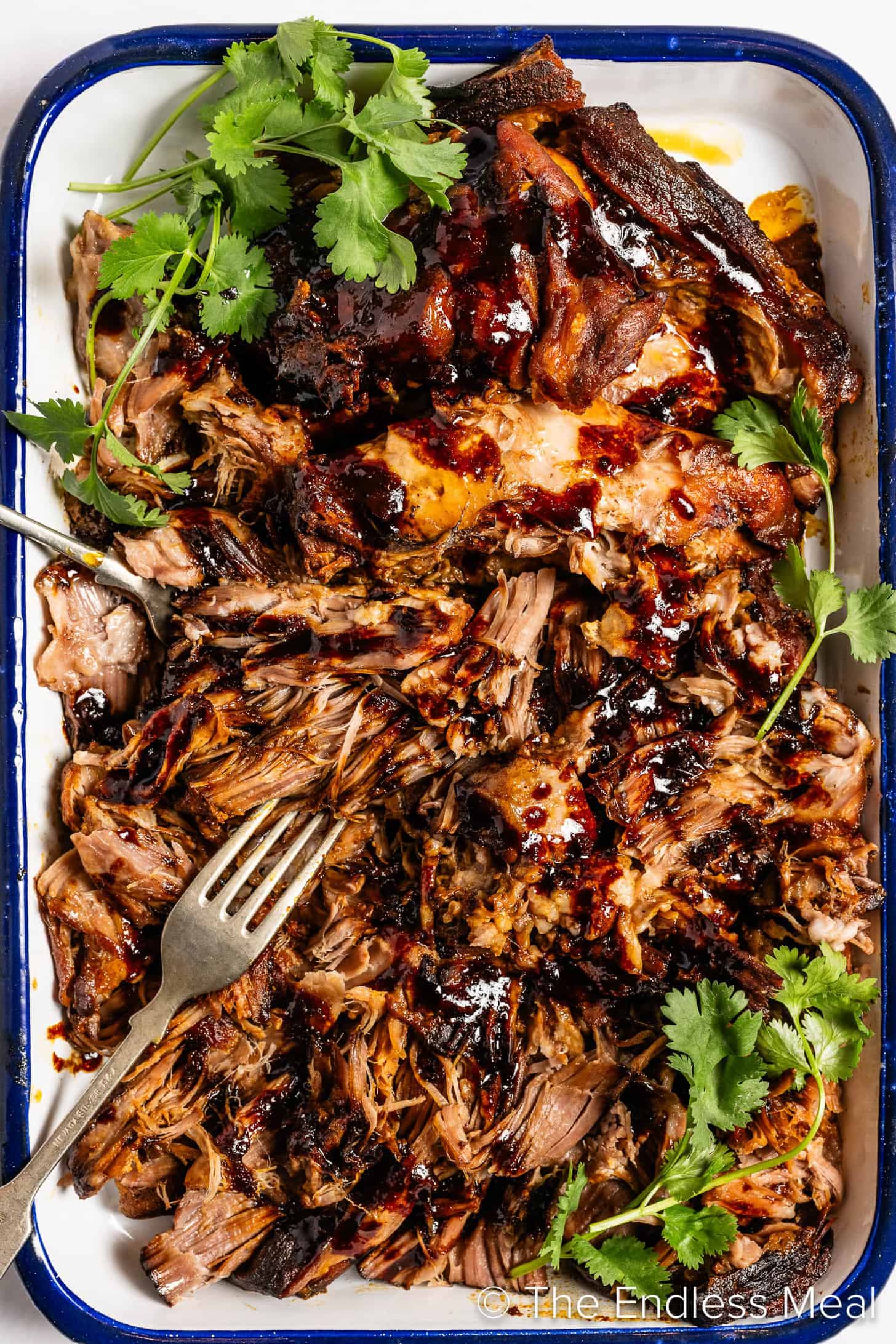
My Korean pulled pork has everything I love about classic, fall-apart pulled pork, but with a bold Korean-inspired twist. It’s slightly sweet, smoky, and just a little spicy, with all the flavor coming together as the pork slowly simmers away in the slow cooker. The result is tender, juicy pork that practically shreds itself and works just as well as a main dish as it does piled onto pizza, noodles, tacos, or bowls.
The ingredient list stays refreshingly simple, but each one pulls its weight. Gochujang brings deep umami and gentle heat, soy sauce adds savory depth, honey balances everything with a touch of sweetness, and chicken stock keeps the pork moist and flavorful as it cooks. Using pork shoulder or butt ensures a rich, melt-in-your-mouth texture that makes this recipe so hard to resist.
Is this an authentic Korean pulled pork recipe?
This recipe features tender, pulled pork wrapped up in my favorite Korean flavor – gochujang. It is quite different than bossam, traditional Korean boiled pork. Bossam is made by boiling a braising cut of pork in a flavorful broth and then thinly slicing it to serve. My Korean Kitchen has a great bossam recipe you should check out.
While my recipe for Korean pulled pork is not authentic, it is a fan favorite made with the flavors you associate with Korean food – sweet, salty, spicy, and delicious!
What cut of meat to use for pulled pork
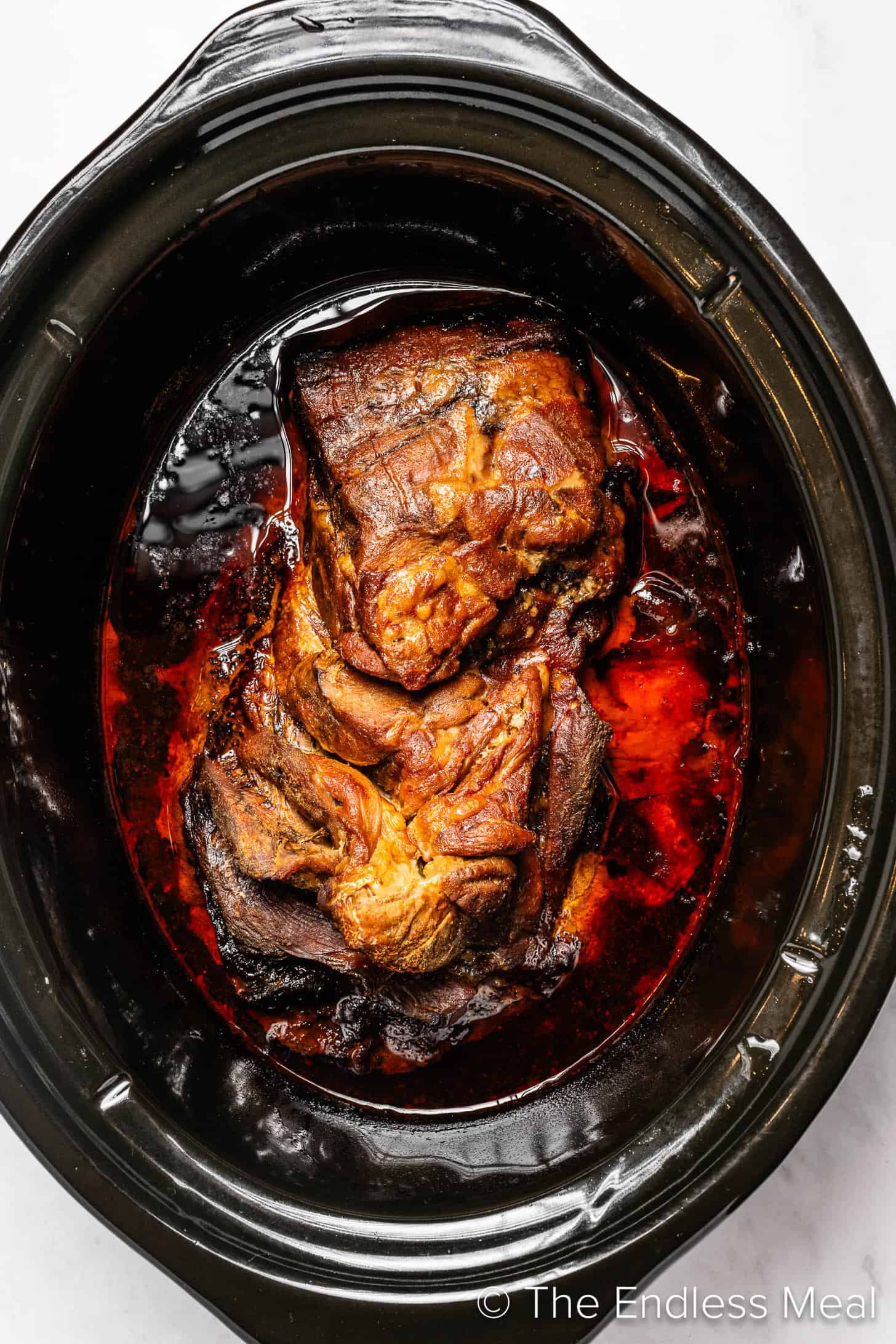
For the best pulled pork, look for pork shoulder, which is also called pork butt or Boston butt (despite the name, it comes from the upper shoulder, not the rear). This cut has plenty of marbling, which keeps the pork juicy, tender, and full of flavor as it cooks. You can use bone-in or boneless — bone-in adds a bit more flavor, while boneless is easier to shred and fits more easily in a slow cooker.
It’s best to avoid pork loin for pulled pork. While it’s a lean cut, it doesn’t have enough fat to stay moist during long cooking, so it can dry out easily.
How to serve Korean pulled pork
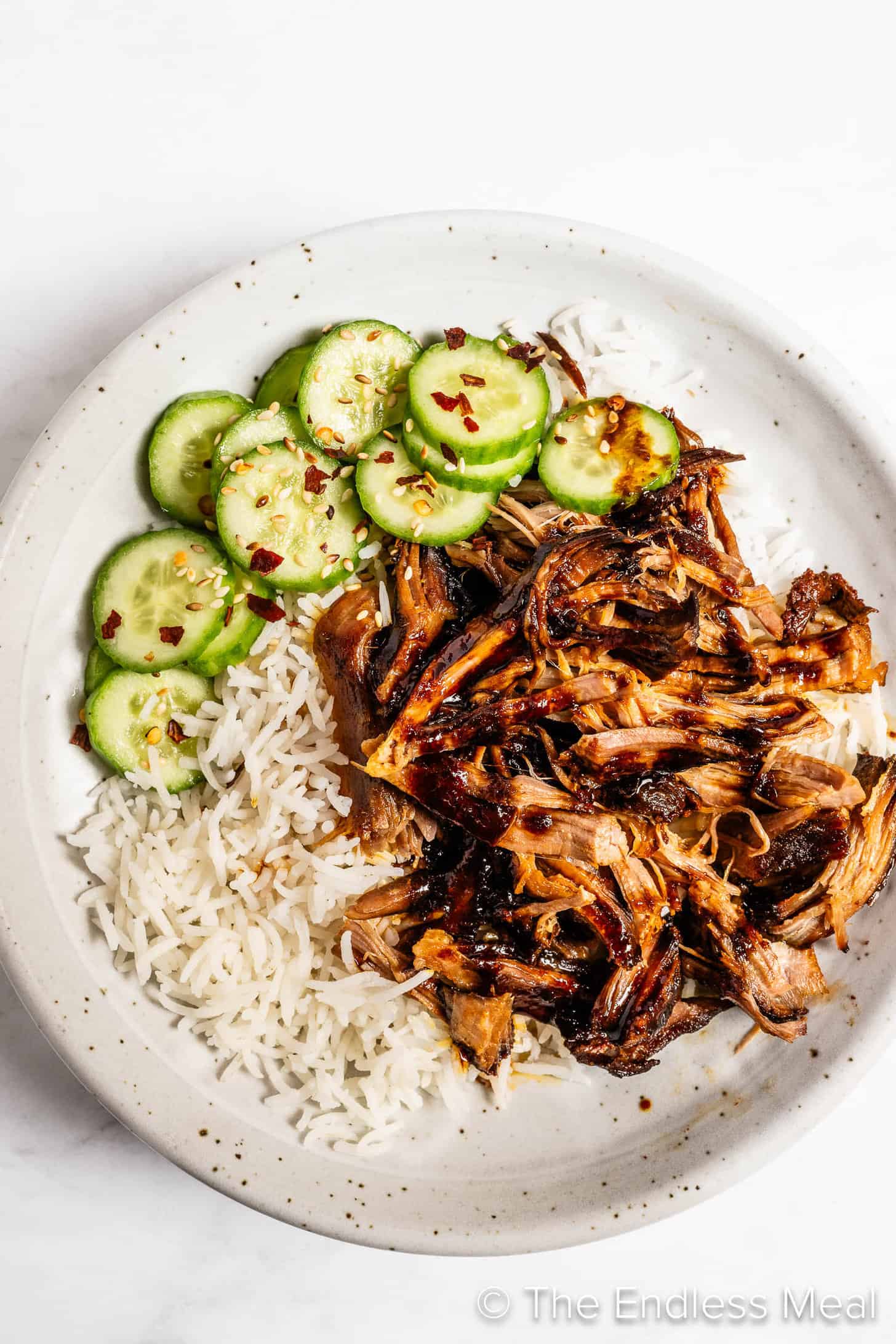
Gochujang pork shines as a standalone main, served alongside some fluffy basmati rice and Asian vegetables, such as my garlic sauteed bok choy. Sprinkle with red pepper flakes, sesame seeds, or green onion slices before serving.
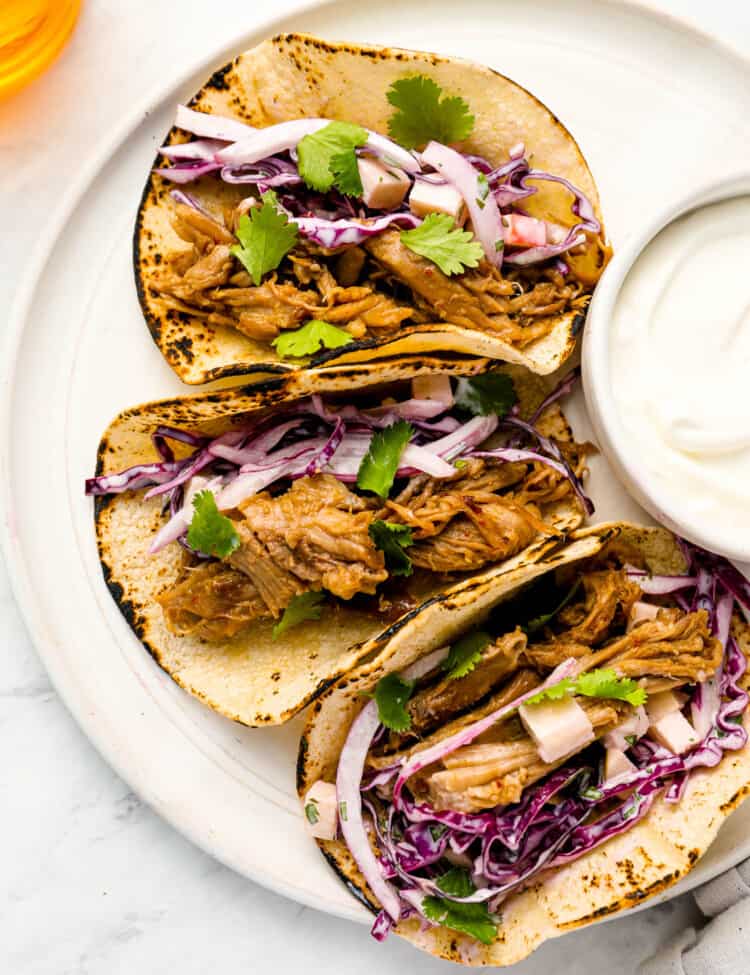
This pulled pork is delicious on this Korean-style pizza. You can also pile it in my Korean pulled pork sandwhich or try rolling it up in my Korean burrito with quick pickled veggies.
Gochujang Korean Pulled Pork Recipe
Ingredients
- ½ cup chicken stock
- ⅓ cup gochujang
- ¼ cup low-sodium soy sauce
- ¼ cup honey
- 5 lb pork shoulder or butt
Instructions
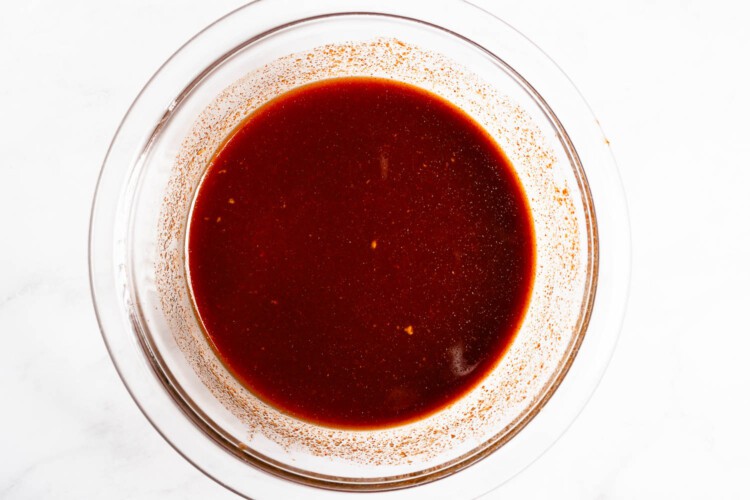
- In a medium-sized bowl, whisk the chicken stock, gochujang, soy sauce, and honey.
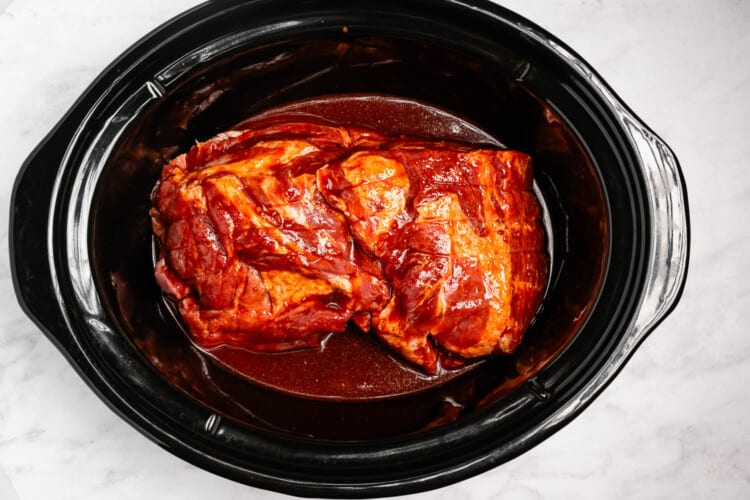
- Put the pork into your slow cooker and then pour the sauce over the top.5 lb pork shoulder or butt
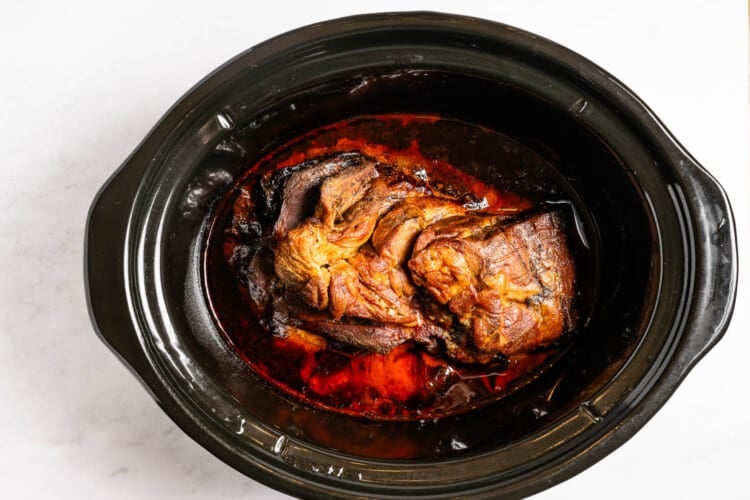
- Cook the pork for 4-6 hours on high heat or 8-10 hours on low heat.
- Remove the pork from the slow cooker and place it into a baking dish. Pour the juice that is in the slow cooker into a small pot and bring it to a boil. Let it boil hard until it thickens and becomes saucy. Pour or scoop the fat off of the sauce.
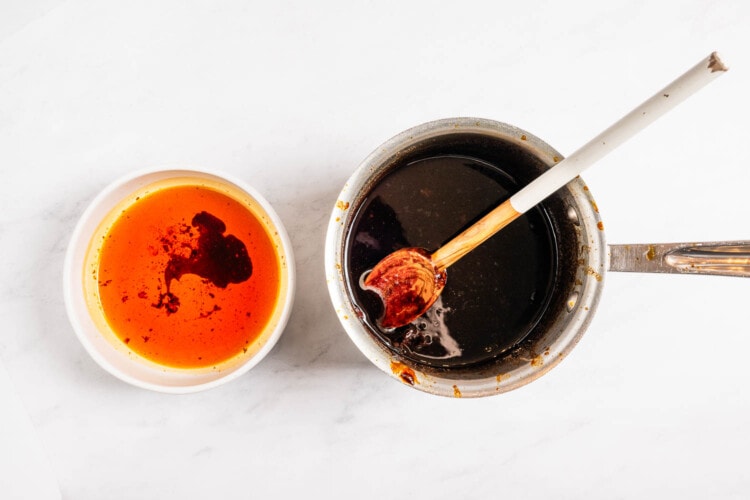
- While the sauce is reducing, shred the pork using 2 forks. Pull it across the grain to make long strands rather than short chunks. When the sauce is finished, pour it over the pulled pork and gently toss so everything is well coated.
Nutrition
We have thoroughly tested this recipe for accuracy. However, individual results may vary. See our full recipe disclosure here.









After a bad run of new recipe attempts that wasted a lot of fairly pricey meat/fish, I gave this one a try. Oh. My. God. *So* good and *so* easy and *so* inexpensive. (I made a small batch – 1.5 lb. of pork – for the trial run, so the gochujang cost almost four times the cost of the meat.)
My slow cooker is enormous. Since I was making only a small batch of this for the initial attempt, I used my Dutch oven instead, baking the batch at 325 for 2-2.5 hours. It was perfect. Also, in lieu of a pork shoulder or butt, I used bone-in Boston butt steaks just because they were on sale. The substitution worked great. (In fact, I’m heading back to the same store today to restock because the sale ends today.)
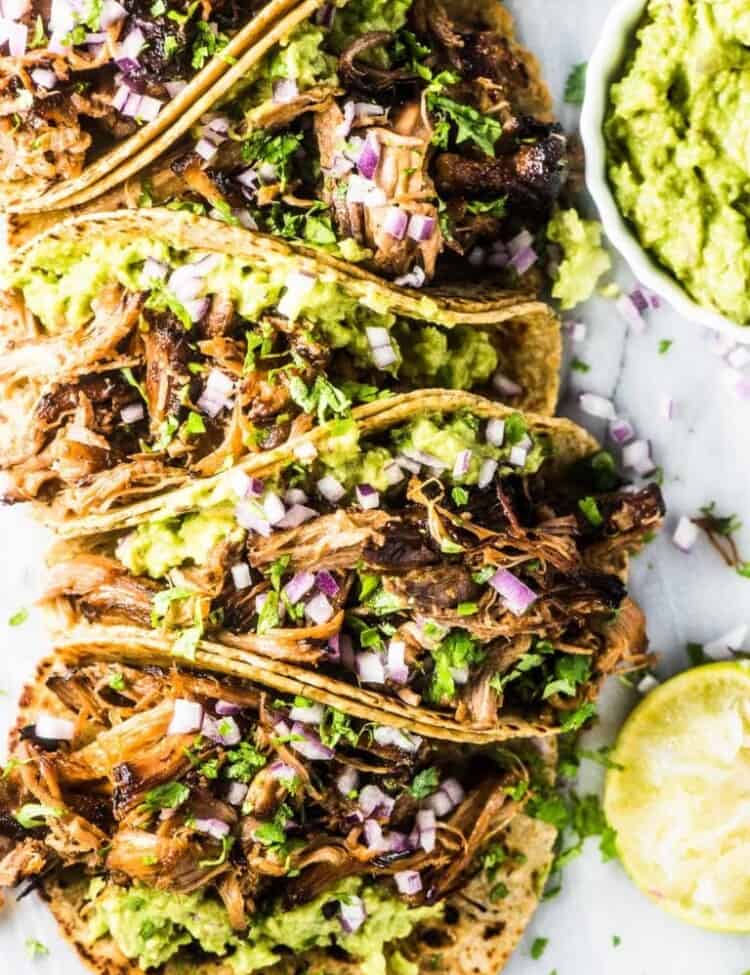
I just ate the meat by itself after making it yesterday, but I’m thinking I’ll have more today wrapped in a tortilla with broccoli slaw. And tomorrow: with rice!
Thanks for restoring my faith in trying new recipes!
This absolutely made my day — thank you for sharing it! 😊 I’m so glad this one turned things around for you (we’ve all had those frustrating recipe streaks).
I love how you adapted it, too — the Dutch oven method sounds perfect, and those Boston butt steaks are such a great find. And your plan for leftovers? Tortilla with broccoli slaw and rice the next day…yes please.
Thanks so much for giving it a try and for the kind note — I’m so happy it restored your faith a little! 💛
I couldn’t find a 5 lb shoulder so I settled for 8 lb. Cooked it long 3nough – wonderfully tender. Good flavor but not enough. Maybe I should have increased the sauce? I’m going to try to find a sauce recipe and add it to the leftovers.
Sounds like you handled that big roast like a pro! With 8 lbs, definitely a good idea to boost the sauce next time—more sauce means more flavor and moisture. Your plan to add sauce to the leftovers sounds perfect, too. Enjoy every tender bite!
Made this yesterday but made a mistake. Instead of Gochujang paste I bought Gochujang sauce and used it to make the sauce in the recipe! So, it was probably way sweeter than it should have been. We ate it in wraps with Asian coleslaw so that helped little to tame down the sweetness. Today I added a tad more Soy sauce to the sauce left from yesterday, mixed the rest of the coleslaw in with the pork, heated and served it over rice! It was still really good but I’ll be sure to buy Gochujang PASTE next time! Still gets 5 stars!
That sounds like a delicious save! Gochujang sauce definitely has more sweetness than the paste, but it’s awesome that you adjusted on the fly and made it work—especially turning the leftovers into a rice bowl! Love how creative you got with it, and I’m so glad it still earned 5 stars. Can’t wait for you to try it with the paste next time—you’re going to love the extra depth and heat! 🔥🍚🥢